


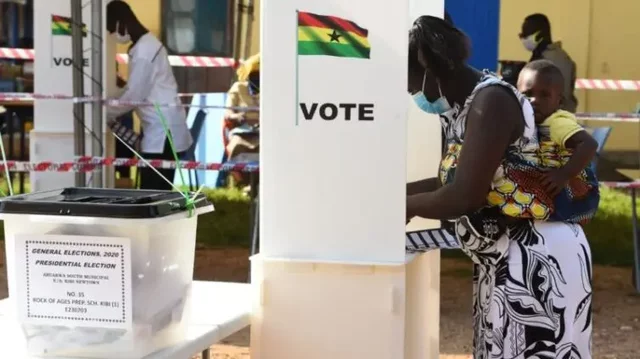
New Patriotic Party (NPP) member Richard Anning has called for major reforms to Ghana’s local government system, arguing that the country should abandon the current practice of presenting assembly elections as non-partisan despite the evident influence of political parties at the local level.
Speaking on EBAANOSEN on Plan B FM, hosted by Ohene Kinnah, Mr. Anning argued that district assemblies are already influenced by partisan politics, with both the NPP and the National Democratic Congress (NDC) maintaining caucuses among elected assembly members.
He cited the situation in areas such as Tema, where assembly members are known to openly identify with political parties, questioning why the country continues to maintain a supposedly non-partisan system when political parties already play a significant role in the assemblies.

Mr. Anning therefore proposed that political parties should be allowed to openly sponsor candidates in assembly elections, while independent candidates should also be permitted to contest.
He believes such a reform could attract more competent professionals, including lawyers and people with technical expertise, who could bring the necessary skills to scrutinize contracts, legislation and development programmes at the local level.
Mr. Anning also advocated for the direct election of Metropolitan, Municipal and District Chief Executives (MMDCEs), arguing that local government leaders should be directly accountable to the people they serve rather than primarily to the central government or political parties.
According to him, directly elected MMDCEs would have a stronger mandate to mobilise local revenue through property rates, business operating permits and other internally generated funds, which could then be channelled into development projects such as roads, drainage systems and streetlights.
He maintained that Ghana’s decentralisation system is long overdue for reform and should focus more strongly on local development and accountability.
Mr. Anning concluded that allowing both political party-sponsored and independent candidates to contest assembly elections, alongside the direct election of MMDCEs, would strengthen accountability and give communities greater control over their own development.
By: Ernest Kumi




Discussion about this post