


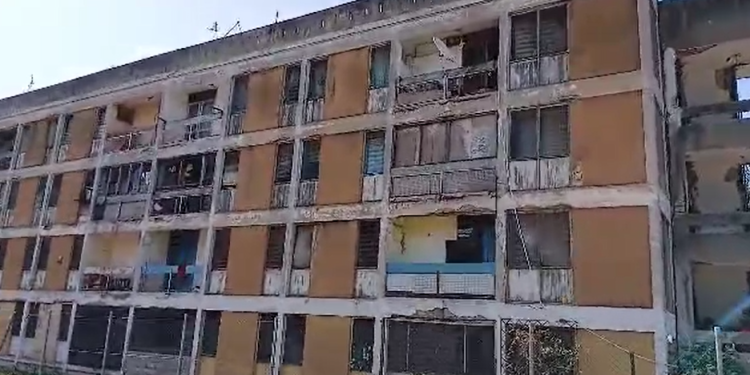
The Minister for Housing has issued an urgent evacuation order for residents of the Kaiser flats in Tema, describing the aging apartment blocks as a “death trap” following a structural assessment that revealed critical safety risks. The directive, announced on Thursday, April 16, compels all occupants to leave the premises immediately, with the government pledging to provide temporary accommodation for displaced families. The Kaiser flats, built several decades ago to house public sector workers, have long shown signs of deterioration, including visible cracks in walls, leaking ceilings, and compromised electrical systems. However, recent engineering inspections reportedly uncovered far more alarming deficiencies—including weakened load-bearing columns and foundation shifts—that could lead to a catastrophic collapse, especially during heavy rains or earth tremors.

Residents of the Kaiser flats reacted with a mixture of shock and anguish upon hearing the news, with many having lived in the buildings for generations. For some families, these flats are the only homes they have ever known, and the prospect of sudden displacement—even for safety reasons—is emotionally and logistically overwhelming. The Minister acknowledged these hardships in his statement but was unequivocal about the urgency: “No life is worth risking for the sake of convenience. These buildings are no longer fit for human habitation.” He added that the government has identified temporary shelters and is arranging transportation to assist residents in moving their belongings. Social workers have also been deployed to help vulnerable populations, including the elderly and families with young children, navigate the evacuation process.
The evacuation order raises broader questions about Ghana’s aging public housing stock and the lack of proactive maintenance and reinvestment. The Kaiser flats are not an isolated case; across the country, numerous state-owned housing estates built in the 1960s, 1970s, and 1980s are showing similar signs of advanced decay. Critics argue that successive governments have neglected routine upkeep, choosing instead to build new, often unaffordable, housing projects while allowing existing units to crumble. In the case of the Kaiser flats, warning signs were reportedly ignored for years, with residents repeatedly complaining about structural issues without receiving meaningful responses. The current crisis could have been averted, housing advocates suggest, with regular inspections and phased renovations rather than emergency evacuations.
As the evacuation gets underway, attention will now turn to the long-term fate of the Kaiser flats site and the displaced residents. The Housing Minister has hinted at plans to demolish the existing structures and redevelop the land with modern, safe, and affordable housing, though timelines and funding mechanisms remain unclear. For now, the priority is ensuring that every resident leaves safely and has a roof over their head tonight. The image of families packing their lives into boxes, leaving behind homes that had become death traps, is a sobering reminder of the human cost of infrastructure neglect. And as Ghana continues to urbanize rapidly, the Kaiser flats evacuation may serve as a wake-up call: a nation cannot build its future while allowing its past to crumble around its citizens.






Discussion about this post