


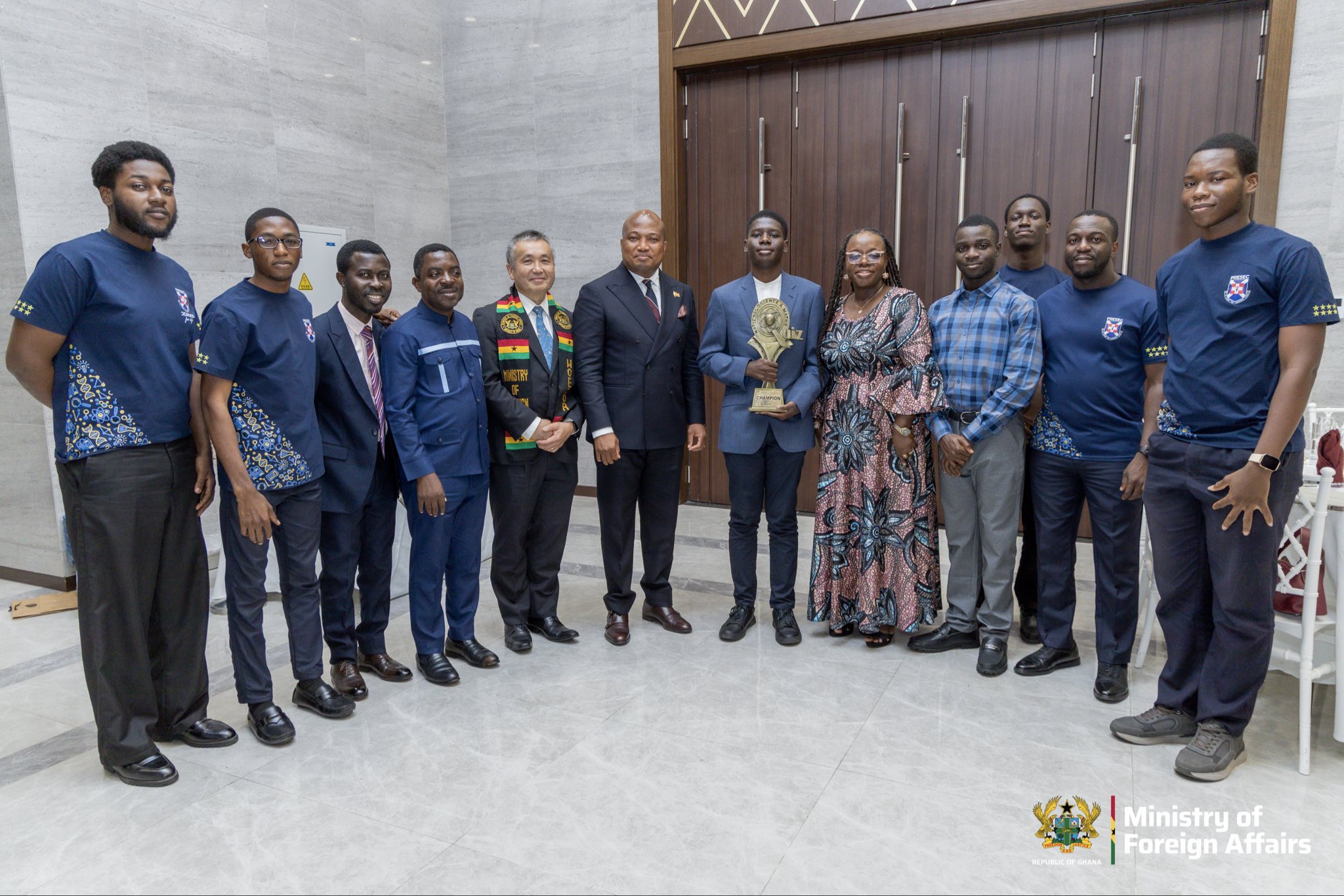
Foreign Affairs Minister Samuel Okudzeto Ablakwa has highlighted Ghana’s growing ambitions in space science and technology following the historic visit of Japanese astronaut and engineer, Dr. Koichi Wakata.
Mr. Ablakwa described Dr. Wakata’s first visit to Ghana as an exceptional and memorable occasion, stressing the importance of exposing Ghanaian students to global leaders in science and technology.
Dr. Wakata is the first Japanese astronaut to undertake five space missions and has spent a total of 504 days in space. He also became the first Japanese astronaut to serve as commander of the International Space Station during Expedition 39.

According to Mr. Ablakwa, Ghana’s cooperation with Japan in space science is expected to play an important role in building the country’s capacity in the sector.
He noted that Ghana and Japan have a space cooperation agreement, which he said he signed last year, as part of efforts to develop Ghana’s space science capabilities with technical support from Japan.
Mr. Ablakwa further disclosed that Cabinet has approved Ghana’s space science policy, with the relevant structures now being established to give effect to the policy.
He said Ghana has never shied away from pursuing ambitious national goals and expressed confidence in the country’s potential to develop its space science and technology capabilities.
As part of the engagement with Dr. Wakata, Mr. Ablakwa invited students of Presbyterian Boys’ Secondary School (PRESEC), the nine-time National Science and Mathematics Quiz champions, to meet the Japanese astronaut.
He said the interaction was intended to inspire the students and expose them to the experiences of an astronaut who has played a significant role in space exploration.
Mr. Ablakwa also expressed appreciation to University of Ghana Vice Chancellor, Professor Nana Aba Appiah Amfo, senior lecturers of the university and officials of the Japan International Cooperation Agency (JICA) for honouring his invitation.
He said Ghana’s partnership with Japan provides an opportunity for the country to strengthen its scientific and technological capacity as it takes what he described as its initial steps towards developing a sustainable space science programme.
By: Bernard Mensah





Discussion about this post