


Ghana Concludes IMF Bailout Programme, Transitions to Policy Coordination Instrument
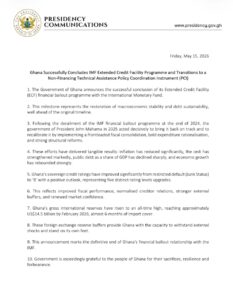
The Government of Ghana has officially announced the successful completion of its Extended Credit Facility (ECF) programme with the International Monetary Fund (IMF), marking what it describes as the end of the country’s financial bailout relationship with the Fund.
In a statement issued by the Presidency Communications Office on Friday, May 15, 2026, the government said the conclusion of the programme reflects the restoration of macroeconomic stability and debt sustainability ahead of schedule.

According to the statement, the IMF programme, which had derailed at the end of 2024, was brought back on track in 2025 through what the government described as decisive measures under President John Mahama’s administration. These included frontloaded fiscal consolidation, expenditure rationalisation, and structural reforms.
Government highlighted improvements in key economic indicators, noting that inflation has reduced significantly, the cedi has strengthened, public debt as a share of GDP has declined sharply, and economic growth has rebounded strongly.
The statement also revealed that Ghana’s sovereign credit ratings have improved from restricted default status to a ‘B’ rating with a positive outlook, representing five successive upgrades.
Additionally, Ghana’s gross international reserves reportedly climbed to approximately US$14.5 billion by February 2026, providing nearly six months of import cover.
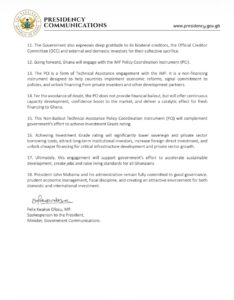
Going forward, Ghana will transition to the IMF’s Policy Coordination Instrument (PCI), a non-financing technical assistance arrangement aimed at supporting economic reforms, boosting investor confidence, and helping countries attract funding from development partners and private investors.
The government clarified that the PCI does not constitute another bailout programme but will instead provide technical support, policy coordination, and market confidence as Ghana works towards attaining investment-grade status.
Government says achieving investment-grade status will help reduce borrowing costs, attract long-term investments, and support sustainable economic growth and job creation.
The statement, signed by Minister for Government Communications and Presidential Spokesperson Felix Kwakye Ofosu, expressed gratitude to Ghanaians, creditors, and investors for their sacrifices and support throughout the programme period.
By: Bernard Mensah |Planbfmonline.com



Discussion about this post