


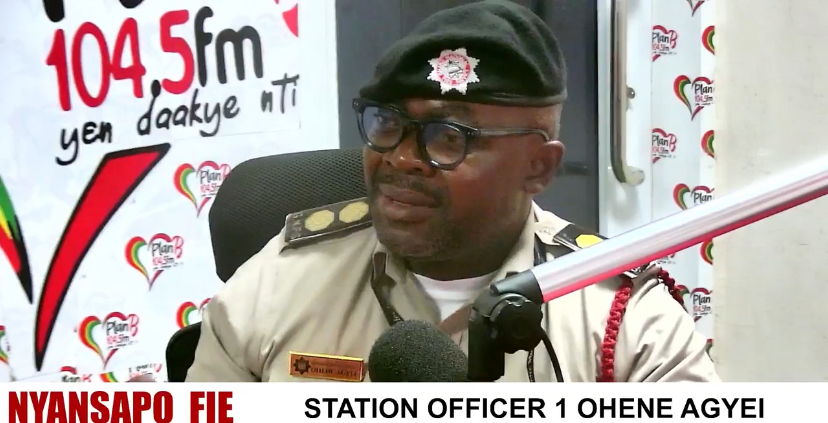
Station Officer 1 Ohene Agyei has underscored the vital role fire hydrants play in effective firefighting operations, urging the public to protect the facilities as they are essential to saving lives and property during emergencies.
Speaking on Plan B FM’s Nyansapo Fie, hosted by Akosua Gyamfua, Station Officer Agyei explained that a fire hydrant is a specially designed outlet connected to Ghana Water Limited’s main distribution pipelines to provide firefighters with a dependable source of water during fire emergencies.
He noted that, unlike ordinary household taps, fire hydrants are installed exclusively for firefighting purposes. Strategically positioned along the main water supply network, they enable personnel of the Ghana National Fire Service (GNFS) to access large volumes of water quickly whenever a fire breaks out.

According to him, fire hydrants come in different forms, including underground hydrants, which are installed beneath pavements, and pillar hydrants, which are visible above ground. He emphasized that these facilities are not the sole property of the Fire Service or Ghana Water Limited but are critical public assets that benefit entire communities by supporting rapid emergency response.
Station Officer Agyei further explained that Ghana Water Limited has dedicated hydrant inspectors who routinely inspect the facilities, monitor water pressure, and identify damaged or faulty hydrants for repairs. He said this regular maintenance is crucial to ensuring the hydrants remain operational and ready for use whenever emergencies occur.
He cautioned members of the public against tampering with or using fire hydrants without authorization, explaining that they require specialized equipment and trained personnel to operate safely. Although some authorized water tankers may access designated hydrants under approved arrangements, he stressed that their primary purpose is to support firefighting operations.
He therefore appealed to communities to help protect fire hydrants from vandalism, obstruction and unauthorized use, stressing that safeguarding these facilities is a shared responsibility that can significantly enhance emergency response and help save lives and property.
By: Ernest Kumi






Discussion about this post