


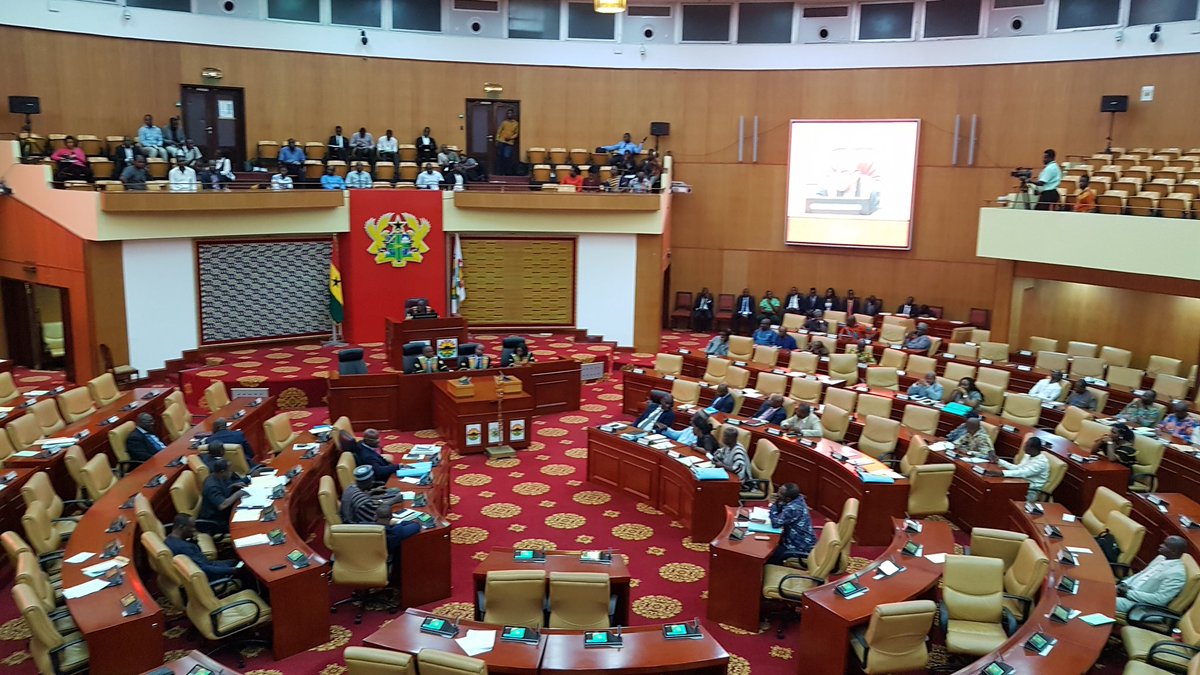
A sharp parliamentary exchange on Friday, February 20, 2026, has cast an unexpected shadow over preparations for next week’s State of the Nation Address (SONA), after the First Deputy Speaker blocked a Minority lawmaker’s proposal to include cocoa farmers and other grassroots citizens among the invited guests at the high-profile constitutional ceremony scheduled for Friday, February 27.
The confrontation unfolded on the floor of Parliament when the Member of Parliament for Ofoase-Ayirebi, Kojo Oppong Nkrumah, seized on an announcement by the Majority Leader that President John Dramani Mahama would address Parliament the following Friday, with Members expected in their seats by 9:30 a.m., to raise a broader concern about who gets to witness the nation’s most important annual address.
Oppong Nkrumah, who serves as Ranking Member on the Economy and Development Committee, challenged the long-standing tradition of reserving the parliamentary public gallery almost exclusively for political office holders, military high command officials, foreign diplomats, and other members of the institutional elite. He argued that SONA, as a national moment of direction-setting and democratic accountability, should symbolically reflect the full breadth of Ghanaian society, with particular attention to those whose labour sustains the economy.
He specifically proposed the inclusion of cocoa farmers and other ordinary citizens, describing them as critical parts of Ghanaian society who deserve visibility at such a significant national ceremony. To support his case, he drew on historical precedent, recalling that during a previous term under President Mahama, certain ordinary working Ghanaians had been invited into the gallery as part of a deliberate effort to humanise the ceremony and broaden its representational scope.
Deputy Speaker Shuts It Down
The proposal went nowhere. First Deputy Speaker Bernard Ahiafor, presiding over the House, reacted sharply to the suggestion and shut it down without extended debate. In a blunt intervention from the chair, Ahiafor reminded Oppong Nkrumah that he was no longer a member of the executive branch of government and therefore had no standing to influence decisions about who the presidency chooses to invite or exclude from the State of the Nation Address. The response closed the matter procedurally and politically.
The intervention carries an irony that political observers have not missed. The precedent Oppong Nkrumah cited, of ordinary Ghanaians being invited to witness SONA under the Mahama administration, predates Mahama’s current second term but was associated with the same National Democratic Congress (NDC) tradition of democratic symbolism that Ahiafor’s own party now governs under. An NDC Deputy Speaker blocking a call for grassroots inclusion that an NDC President once championed is a political optic the Minority is unlikely to let rest quietly.
Bernard Ahiafor, born February 6, 1973, is a practising lawyer and a politician who has represented the Akatsi South Constituency in the Volta Region since 2013, serving across the Sixth, Seventh, Eighth, and now Ninth Parliament of the Fourth Republic. He was elected First Deputy Speaker of the Ninth Parliament on the nomination of the NDC Majority caucus, seconded by the Deputy Minority Leader. In recent weeks, Speaker Alban Bagbin publicly endorsed Ahiafor as a worthy successor to the speakership, describing the country as better off if Ahiafor were to eventually succeed him.
The Symbolism of an Empty Public Gallery
The exchange has reignited a wider debate that surfaces periodically in Ghana’s democratic discourse: who does SONA actually speak to, and who gets to be physically present when the President speaks?
The 2026 SONA is expected to be attended by lawmakers from both the Majority NDC and Minority New Patriotic Party (NPP) caucuses, government officials, members of the diplomatic corps, traditional leaders, religious leaders, civil society representatives, and other invited guests, a composition that, by Oppong Nkrumah’s measure, falls well short of representing the farmer, the trader, the fisher, and the artisan who form the working backbone of the Ghanaian economy.
The Parliamentary Service has already issued media accreditation guidelines for the February 27 address, reserving the public gallery for invited guests and directing media houses to conduct interviews and live broadcasts from the Foyer on the Ground Floor of the Chamber Block.
Source: Newsghana.com





Discussion about this post