


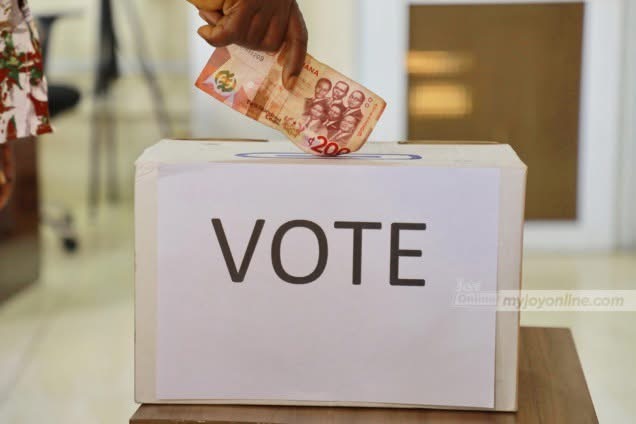
Richard Anning, a member of the New Patriotic Party (NPP) in the West Constituency, has endorsed Chief Justice Paul Baffoe-Bonnie’s condemnation of vote buying, describing the practice as a long-standing problem that continues to undermine Ghana’s democracy.
Speaking on Plan B FM’s Nkosuo Nsem with host Kofi Sekyi, Anning alleged that vote buying has become entrenched in the country’s political system, claiming that even the Chief Justice is aware of the practice.
He further alleged that some Members of Parliament have accepted bribes in exchange for approving ministerial nominees, insisting that such claims should not be ignored if Ghana is serious about tackling corruption.

According to Anning, the country’s inability to scrutinise the wealth and financial backgrounds of public officials before and after they assume office has contributed significantly to corruption.
“We do not conduct proper background checks before appointing people to public office, and we also fail to question the sudden wealth some individuals accumulate after assuming office,” he said.
He cited the case of the Member of Parliament for Asante Akim North, Ohene Kwame Frimpong, popularly known as OK Frimpong, who is currently being detained in the Netherlands over allegations linked to an international fraud investigation. Anning argued that stronger vetting mechanisms could help prevent such situations.
He also urged Ghanaians to stop being selective in condemning wrongdoing, saying the country must confront corruption wherever it occurs rather than remain silent out of political loyalty.
His comments were in response to recent remarks by Chief Justice Paul Baffoe-Bonnie, who warned that vote buying poses a serious threat to Ghana’s democratic development.
Speaking at the launch of the National Integrity Awards Scheme, the Chief Justice said politicians who uphold integrity may lose elections, but that ethical leadership is more important than winning through corrupt practices.
“The honest politician may lose an election, but vote-buying weakens democracy and ultimately impoverishes the very people whose votes were purchased,” the Chief Justice stated.
He added that while integrity often comes at a personal cost, corruption imposes a far greater burden on society, stressing that no nation can prosper by rewarding dishonesty. He further noted that public trust is the foundation of strong institutions and warned that corruption continues to erode confidence in governance and the justice system.
By: Bernard Mensah





Discussion about this post