


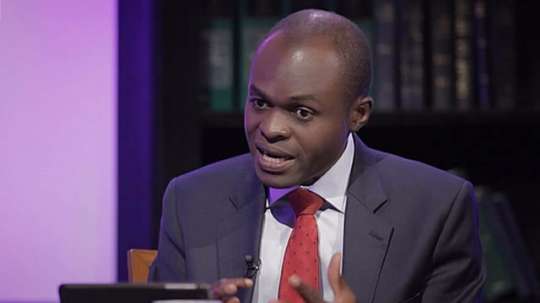
Private Legal Practitioner, Martin Kpebu, has expressed strong concerns about the state of Ghana’s anti-corruption efforts, arguing that the entire system meant to fight corruption has become disorganized and ineffective.

According to him, recent developments surrounding corruption-related cases reveal deeper structural challenges that undermine the credibility of the fight against the menace.
Speaking in reaction to the decision of 12 civil society organisations (CSOs) to join a case at the Supreme Court involving the Office of the Special Prosecutor (OSP), he suggested that the situation reflects a troubling contradiction within the anti-corruption framework.
He noted that instead of a unified and transparent approach to tackling corruption, the process has become entangled in competing interests, legal disputes, and institutional confusion.
Martin Kpebu was particularly critical in his assessment, stating that even the mechanisms designed to combat corruption are themselves being affected by corrupt practices.
In his words, “The whole corruption fight is in disarray; even in the fight against corruption, there is corruption.” This remark underscores his belief that the credibility of anti-corruption institutions is being eroded by internal inefficiencies and external interference.
He further implied that the growing involvement of multiple stakeholders, including civil society organisations, while important for accountability, may also be reflecting a lack of coordination and clarity in the broader legal and institutional framework.
According to him, when too many competing voices and interests converge in sensitive legal matters, it can complicate rather than strengthen the pursuit of justice.
Kpebu’s comments add to ongoing national debates about the effectiveness of Ghana’s anti-corruption architecture, especially regarding the role and independence of the Office of the Special Prosecutor.
His concerns highlight the need for stronger institutional discipline, clearer mandates, and improved collaboration among all actors involved in the anti-corruption space.
Overall, his remarks suggest that unless systemic weaknesses are addressed, efforts to fight corruption may continue to face credibility challenges and reduced public confidence.






Discussion about this post