


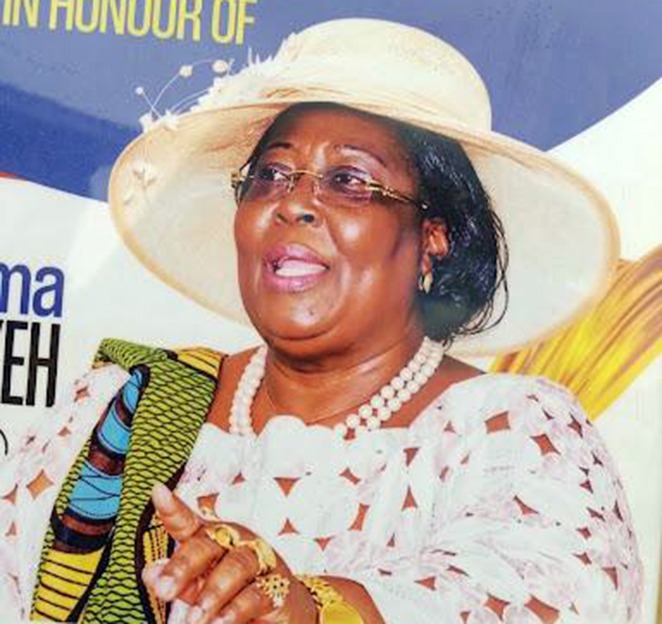
The former Treasurer of the New Patriotic Party (NPP), Madam Gifty Aryee, popularly known as Daavi Ama, has urged the party’s founding members and elders to break their silence over what she describes as developments threatening the traditions of the party.
She expressed concern about what she considers the growing influence of newcomers at the expense of long-standing members who helped build the NPP, saying the trend was eroding the party’s culture of merit and experience.
“NPP is too fond of giving seats to newcomers and that is not too comfortable with me. Someone will come in and with a little bit of freebies, the person becomes notable,” she told The Chronicle in an exclusive interview.

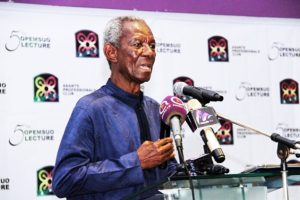
Daavi Ama, a veteran NPP member and political daughter of the late Prof Albert Adu Boahen, who doubles as the first female Treasurer of the NPP, said some of the party’s current members did not experience the difficult period in which the NPP was formed and, therefore, lacked an appreciation of its traditions and history.
She consequently called on the party’s elders, particularly the Council of Elders, to be more vocal on internal developments and provide the guidance she said was needed to protect the party’s institutional memory.
‘Listen to the Gamalians’
According to Daavi Ama, the silence of some of the party’s founding figures, whom she described as ‘Gamalians’ on internal developments, was worrying, particularly at a time when she believed the NPP needed their experience.
She questioned why some of the party’s veteran members appeared more willing to comment on national issues outside the NPP than on challenges confronting the party itself.
“Where is Kwadwo Mpiani, Kwame Pianim, Nyaho Nyaho Tamakloe and the likes?” she asked, stressing the importance of experienced members speaking up when they believed the party was departing from its established traditions.
She invoked the Ga saying, “Onupka Bɛhyia Alo,” stressing the importance of seeking the counsel of the elderly.
Daavi Ama also invoked the Akan adage, “Woni Panyin a, Due,” meaning that one without an elder’s guidance can lose their way, to underscore the importance of the wisdom and experience of elders.
She said she was speaking from experience, having been involved in the party during its formative years and witnessed the contribution of its early leaders.
She recalled the period leading to the NPP’s first presidential contest in 1992, when a number of prominent figures sought to lead the party. She said the party’s pioneers operated in difficult political circumstances and recalled a lecture delivered by Prof Adu Boahen at the British Council Hall, at a time when the country was under military rule.
According to her, the lecture helped challenge what she described as a “culture of silence” in the country.
“I was around when these people wanted to lead the NPP. I am not hallucinating nor dozing because I was at the Legon Great Hall,” she said.
According to her, the sacrifices made by the party’s early leaders should not be forgotten in the management of the NPP today.
‘Cronyism has taken over’
Asked whether the NPP had moved away from its traditional image as a party of intellectuals, Madam Aryee said she would not describe the party as having abandoned that tradition entirely.
However, she alleged that cronyism and personal relationships had increasingly taken precedence over meritocracy, a development she said was affecting the party’s structures.“People feel because of their money, they should never be called to order,” she said.
Daave Ama cited her own experience under former President John Agyekum Kufuor as an example of what she considered a less vindictive approach to party politics.
She recalled that although she did not support Mr Kufuor during the NPP’s presidential primaries, he appointed her to the National Media Commission after he became President.
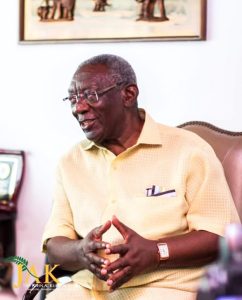
She said other members who had disagreed with Mr Kufuor during the opposition years were also able to put their differences aside and work for the administration after the election.“Kufuor was not a vindictive leader, otherwise I and several others would not have been given an appointment during his regime,” she said.
She further recalled the roles played by Madam Esther Ofori, Ghana’s former ambassador to Equatorial Guinea and others in the NPP’s campaign efforts in the Volta Region, arguing that some of the people who contributed to the party’s expansion were no longer adequately represented in its top hierarchy.
She also cited the Obetsebi-Lamptey family as among those whose contributions to the party, in her view, demonstrated the importance of sacrifice and commitment beyond personal interests.
She also questioned the defeat of former NPP Communications Director, Richard Ahiagbah, in the party’s recent leadership elections, linking it to what she described as the diminishing presence of Voltarians in the party’s leadership.“All of a sudden, some people have surfaced in the party because of whatever, and I am talking about the Volta Region,” she said.
Questions NPP constitutional change
Daavi Ama also raised questions about the constitutional amendment adopted at the NPP’s recent National Delegates Conference in Kumasi, under which the party’s elected presidential candidate becomes the leader of the party.
She said she had no objection to Dr Mahamudu Bawumia personally, but questioned the process through which the constitutional change was introduced and approved.
“I do not have anything against Dr Bawumia, but some people have started gnashing their teeth,” she said.
She questioned whether the proposed amendment had been sufficiently discussed at the national, regional and constituency levels before it was approved.
According to her, a similar proposal had emerged during the administrations of former Presidents Kufuor and Nana Akufo-Addo but was not adopted.
She, therefore, asked why the party had now decided to change its position.
Daavi Ama said the development had created unease among some members, although she believed many were reluctant to publicly express their concerns.
“Per what happened in Kumasi, all is not well, but people are scared to speak up. People are scared,” she said.
She consequently urged the Council of Elders to assert itself more strongly and play its role in guiding the party.
Daavi Ama maintained that the NPP’s history and institutional memory should not be sacrificed as the party evolves, insisting that the experience of its founding members remained relevant to its future.
Source: Thechronicle.com.gh






Discussion about this post