


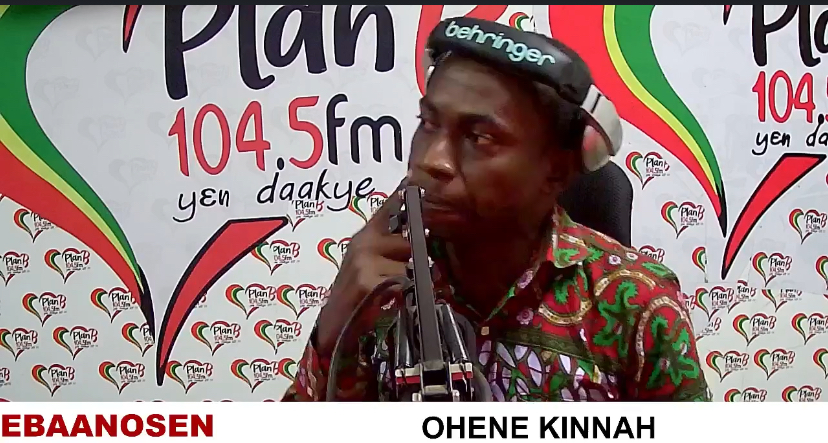
Media personality Ohene Kinnah has weighed in on the proposed 24-hour economy policy, popularly known as “Operation 133,” stressing that while the initiative has great potential, government must first address critical national challenges such as security, water supply, and electricity.
Speaking on Plan B 104.5 FM’s Ebaanosen hosted by Adom De Star Boy, Kinnah described the 24-hour economy as a system where “one job is spread across three shifts,” saying the model could help revive Ghana’s struggling industries and create significant employment opportunities.
He pointed to the textile sector as one of the major beneficiaries, explaining that many collapsed factories could return to operation under a properly implemented shift system. He also highlighted cocoa processing factories, rice mills, sugar production companies, and chocolate manufacturing as industries likely to thrive under the policy.

According to him, a successful implementation of the 24-hour economy could become a strong political advantage by showcasing visible economic progress and job creation.
Despite backing the concept, Kinnah expressed reservations about extending the policy to markets without adequate protection for traders, especially women who operate late into the night.
“I don’t support a 24-hour market system unless there is proper security for the market women,” he stated.
Kinnah further argued that government must prioritize solving existing challenges before embarking on a nationwide rollout of the policy.
“Our water system, electricity, and general security need serious attention before any grand rollout,” he said. “A leader’s primary duty is to solve existing problems.”
His comments have since generated mixed reactions among listeners, with some supporting the initiative and others calling for broader stakeholder consultations before implementation.
By: Ruth Arthur |Planbfmonline.com






Discussion about this post