


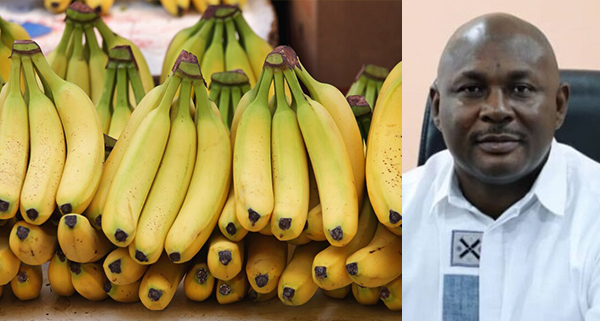
Concerns are mounting over the potential health risks associated with the consumption of artificially ripened bananas, following information received by The Heraldindicating that certain chemicals used in the ripening process may pose serious health threats to consumers.
Information contained in an audio recording forwarded to the newspaper suggests that consumers may be exposed to various health conditions, including stomach ulcers, kidney complications and liver problems, linked to bananas that are artificially ripened using chemicals before reaching the market.
Sources familiar with the banana trade revealed that the Akwesiho community and surrounding areas in the Kwahu East District of the Eastern Region have become major centres for banana trading and distribution. However, concerns are growing that some of the fruits supplied to major markets could pose potential risks to consumers.

Individuals familiar with the trade allege that some bananas are treated with chemicals containing calcium carbide to accelerate ripening before they are transported to major markets, particularly in Accra and Kumasi, where demand for the fruit remains high.
A former worker at one of the banana trading companies, who spoke on condition of anonymity, claimed that nearly 70 per cent of the bananas consumed in Accra and Kumasi originate from the area.
The former worker explained that bananas harvested directly from farms are often still green and unripe, prompting some traders to use chemical treatments to ripen them quickly to meet market demand.
According to him, the bananas are sometimes washed or treated with solutions containing calcium carbide so that they ripen within a day and appear ready for sale.
He further indicated that during the eight months he spent working with one of the companies involved in the trade, he personally witnessed the practice on several occasions.
Calcium carbide, commonly known locally as “cambad”, is a chemical compound banned in many countries for use in fruit ripening because of its potential health risks, including respiratory complications and possible carcinogenic effects.
When the chemical reacts with moisture, it releases acetylene gas, which behaves similarly to ethylene, the natural plant hormone responsible for fruit ripening. This process causes bananas to turn yellow rapidly, making them appear ripe even though the ripening process is artificial.
Health experts have warned that the use of calcium carbide is dangerous because the substance often contains impurities such as arsenic and phosphorus, which are toxic and potentially carcinogenic.
Exposure to such contaminants has been associated with several health problems, including damage to the liver and kidneys, irritation of the digestive system and other long-term complications.
In some instances, traders reportedly wrap the chemical in paper, sprinkle it with water and place it beneath piles of bananas to release gas that accelerates ripening.
Others are said to dip the bananas into a solution containing the chemical before packing them for distribution to markets. These methods can make the fruits appear attractive and uniformly yellow, even though they may not have undergone the natural ripening process.
Experts say artificially ripened bananas can sometimes be identified by their appearance. Such fruits often have a bright yellow exterior while the stalk remains green. They may also lack the natural brown or black speckles that typically appear on bananas that ripen naturally on the plant.
The practice has long been a concern for regulators in Ghana. The Food and Drugs Authority (FDA) has repeatedly warned traders and fruit vendors against using calcium carbide, describing it as illegal and hazardous to public health.
On April 17, 2024, the Chief Executive Officer of the FDA, Delese Mimi Darko, cautioned that handlers of the chemical may also face health risks in addition to the dangers posed to consumers.
In a statement, the Authority said its attention had been drawn to a social media video demonstrating the use of calcium carbide to enhance the ripening of mangoes and suggesting ways to distinguish chemically ripened fruits from naturally ripened ones.
Following the circulation of the video, the FDA conducted a survey to sample and test mangoes from major markets and sales points across the country. According to the Authority, results obtained from samples tested so far showed that none contained calcium carbide, although monitoring and public education efforts were continuing.
The FDA stressed that calcium carbide is toxic and that using it to accelerate the ripening of fruits is hazardous to consumers and therefore constitutes a criminal act.
The Authority also clarified that the so-called “floating test” used in the video to determine whether a mango is naturally ripened or chemically ripened is not a scientifically proven method. It noted that fruit flotation could be caused by other factors, including pest infestation from fruit flies and mango moths.
The FDA used the opportunity to caution traders and the public against the use of calcium carbide in fruit ripening or food processing, emphasising that the chemical is carcinogenic and dangerous to both handlers and consumers. It also urged the public to report any incidents of chemicals being used to ripen fruits.
Meanwhile, researchers at the Kwame Nkrumah University of Science and Technology (KNUST) have announced the development of a rapid, non-destructive method for detecting calcium carbide in bananas.
The development, announced on February 10, 2025, is expected to help regulatory authorities and health officials monitor the market more effectively and ensure that fruits sold to the public are safe for consumption.
Unlike earlier testing techniques that required cutting or destroying the fruit, the new approach allows scientists to identify chemically ripened bananas without damaging them.
The findings, published in the Nature Journal of Science of Food, outline a combination of scientific techniques capable of detecting carbide-ripened bananas, whether peeled or unpeeled.
The research team tested two banana varieties and was able to determine both the type of carbide treatment used and the duration of exposure to the chemical.
Dr John-Lewis Zinia Zaukuu, the lead author from the Food Science Department, said the innovation could significantly improve food safety monitoring.
“This method not only ensures consumer safety but also provides a practical and economical solution for regulatory bodies and the food industry to monitor and control the use of harmful ripening agents,” he said.
Although the widespread use of calcium carbide for fruit ripening has been reported in several parts of Ghana, direct confirmation of specific traders in the Akwesiho area engaging in the practice remains limited.
Nonetheless, the revelations from the former worker and the concerns raised by experts underscore the need for increased monitoring of fruit-ripening practices in the banana trade to safeguard public health.
Source: TheHeraldghana






Discussion about this post