


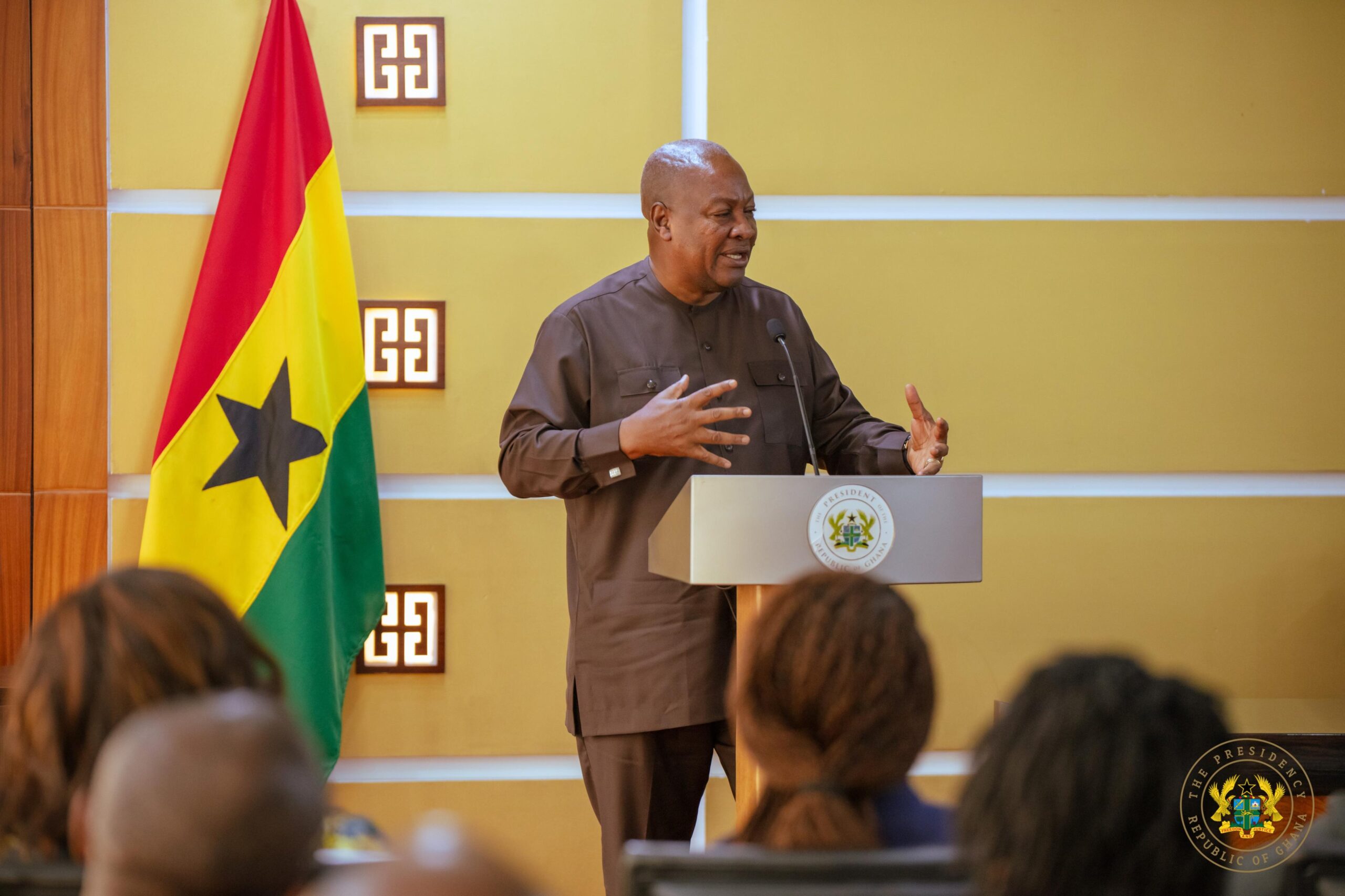
President John Dramani Mahama has ordered boards of state-owned enterprises and public institutions in Ghana to immediately halt international travel funded by the state, citing concerns about rising costs and the need for stricter fiscal discipline.
In a directive issued by the Office of the President and signed by Secretary to the President Callistus Mahama, the government said frequent overseas trips by boards for training programmes, retreats, conferences and study tours had led to “significant expenditure” on airfares, accommodation and allowances.
The order requires all ministers supervising state-owned enterprises and public institutions to ensure that such travel stops with immediate effect unless exceptional approval is granted by the presidency.

“Boards of SOEs and public institutions shall not undertake international travel for training, retreats, conferences, or study tours funded directly or indirectly from public resources,” the directive said.
Any board seeking to travel abroad must submit a formal request through the relevant sector minister to the Chief of Staff for the express approval of the president before arrangements are made.
Requests must include detailed justification covering the purpose of the trip, expected outcomes, strategic relevance to the institution’s mandate, the number of participants and the estimated total cost.
Institutions must also explain why the objectives cannot be achieved through local or virtual arrangements.
The directive encourages ministries and public institutions to prioritise local training programmes, in-country retreats and partnerships with universities and professional bodies in Ghana as more cost-effective alternatives.
Where specialised training is required, institutions are also urged to explore virtual platforms, technical exchanges or short-term expert engagements within the country rather than organising overseas travel involving full board delegations.
The presidency said the move forms part of broader efforts by the government to tighten expenditure controls and reduce non-essential public spending, as authorities seek to redirect resources toward priority programmes, infrastructure development and social interventions.
Ministers have been asked to immediately inform boards, chief executive officers and management teams under their supervision and ensure strict compliance with the directive.
Source: Asaaseradio.com






Discussion about this post