


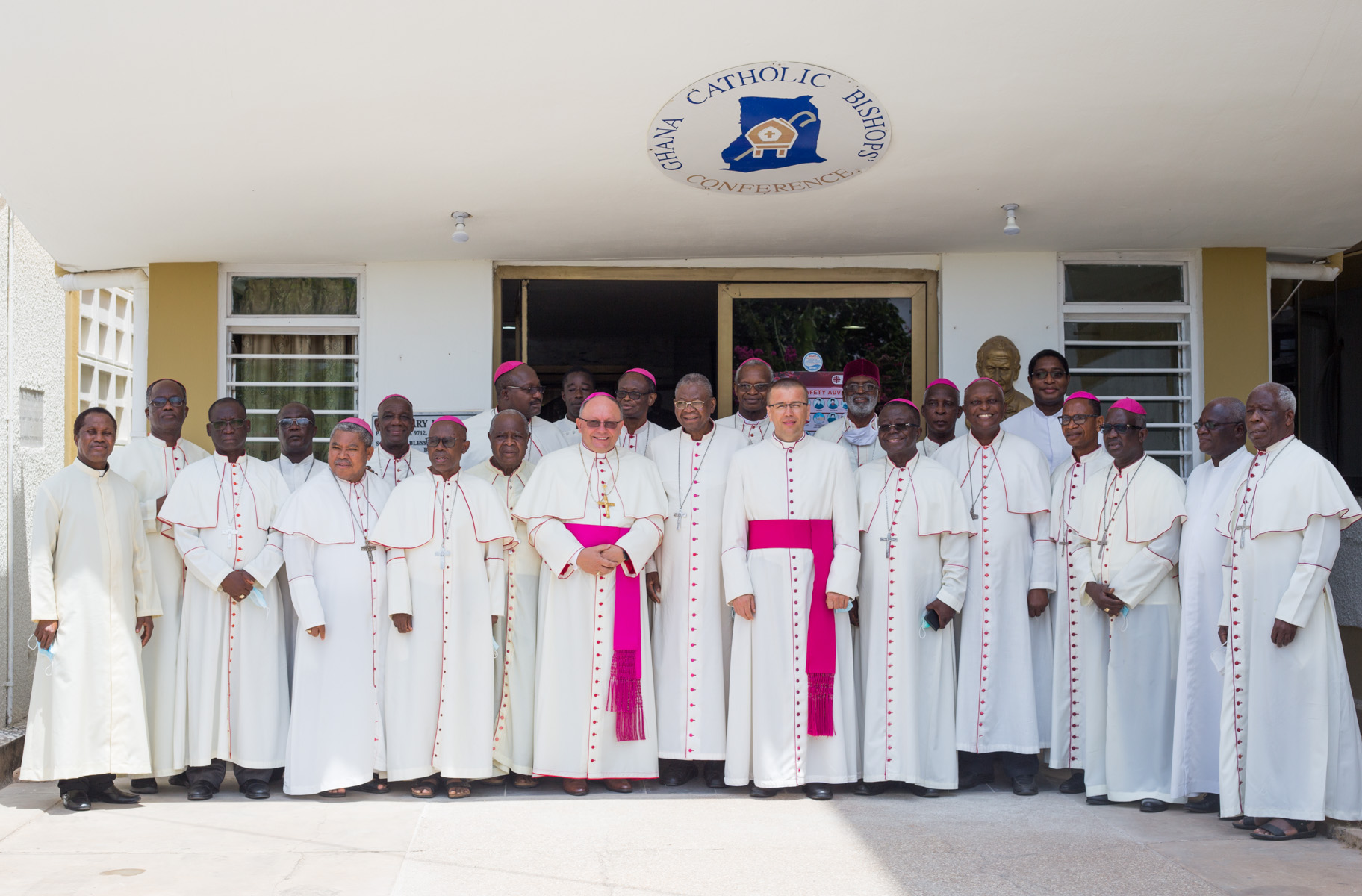
President of the Ghana Catholic Bishops’ Conference (GCBC), Most Rev. Matthew Kwasi Gyamfi, has called on Parliament to pass the Anti-LGBTQ+ Bill in its original form, warning against any attempt to dilute or alter its provisions. In a Facebook video shared by P. K. Sarpong on 3 June 2026, the Bishop made a passionate appeal, insisting that Ghanaians elected wise representatives to make laws that reflect the moral and cultural values of the people. He declared: “We don’t want a disfigured law or a hollow law. Parliament must pass what we sent to them.”
The Bishop’s remarks come amid renewed debate following the Speaker of Parliament’s directive for MPs to reconsider the bill to reflect collective and bipartisan acceptance. His statement underscores the position of the Catholic Bishops’ Conference, which has consistently advocated for legislation that upholds Ghana’s traditional family values and moral principles.
According to Rev. Gyamfi, the Church and the majority of Ghanaians have already made their stance clear through consultations and petitions submitted to Parliament. He emphasized that any attempt to weaken the bill would betray the trust of the people and undermine the moral foundation of the nation.

Observers note that the GCBC has been one of the most vocal religious bodies supporting the passage of the Anti-LGBTQ+ Bill. The Conference argues that the law is necessary to protect Ghana’s cultural identity and prevent the normalization of practices it considers contrary to Christian and traditional values.
In the video shared by P. K. Sarpong, the Bishop expressed confidence that Parliament would act wisely and uphold the will of the people. He reminded legislators that their mandate is to serve the interests of Ghanaians, not external influences or political convenience.
Public reaction to his statement has been divided. Supporters of the bill praised the Bishop for his clarity and courage, describing his words as a moral compass for the nation. Critics, however, argue that the Church’s position risks infringing on human rights and could isolate Ghana internationally. The debate continues to polarize public opinion, with strong arguments on both sides about morality, freedom, and legislative responsibility.
At its heart, Rev. Gyamfi’s message is a call for integrity and conviction. He insists that Ghana’s lawmakers must resist pressure to alter the bill and instead pass it in its original form — a version he believes truly represents the voice of the people.
Your comments are welcomed. Share your thoughts on whether this statement highlights religious influence in legislation or raises concerns about humanrightsandmoralvalues.






Discussion about this post