


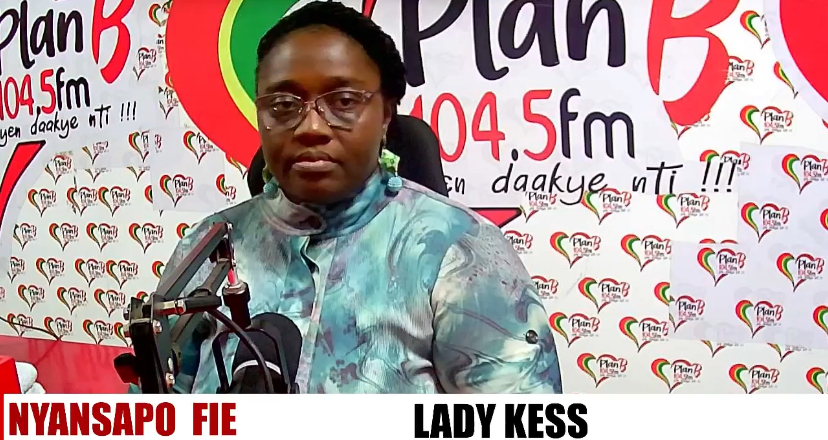
Speaking on Plan B FM’s Nyansapo Fie with host Akosua Gyamfua, Lady Kess explained that self-destructive behaviour can, in some cases, be controlled, while in others it may be beyond an individual’s control. She noted that when such behaviour stems from underlying mental health or psychological conditions, it should be regarded as a disorder that requires appropriate care, treatment, and support.
Lady Kess further distinguished between intentional and unintentional forms of self-destructive behaviour. She explained that intentional self-destructive behaviour may involve individuals who deliberately make the lives of others miserable while pretending to be friends or well-wishers. According to her, such people intentionally engage in actions that inflict emotional pain, create confusion, or cause harm to those around them.
She described unintentional self-destructive behaviour as actions carried out by individuals who may be struggling with unusual or distressing thoughts. Such individuals, she said, often act impulsively without fully understanding or controlling the consequences of their actions.

Lady Kess also identified excessive alcohol consumption, drug abuse, and other unhealthy lifestyle choices as major contributors to self-destructive disorders. She stressed that these habits can impair judgment, aggravate mental health challenges, and increase the risk of harmful behaviour.
She concluded by encouraging individuals experiencing such challenges to seek professional help, emotional support, and healthy coping strategies before their condition worsens. According to her, early intervention is essential in preventing self-destructive behaviour from escalating into more serious personal and psychological problems.
By: Ernest Kumi|Planbfmonline.com




Discussion about this post