


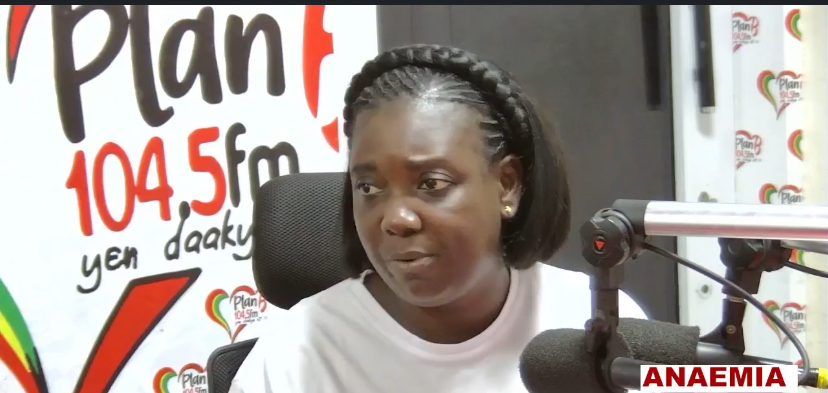
Mrs Jemima Ohene, a Health Promotion Officer at Tema Urban Hospital, has raised concern over the prevalence of anaemia among children, pregnant women and other vulnerable groups, warning that the condition can lead to serious health complications if not prevented and treated early.
Speaking on anaemia on Nyansapo Fie, Plan B FM’s family, relationship and lifestyle programme, hosted by Akosua Gyamfua. The guest, Mrs Ohene explained that anaemia occurs when the body does not have enough haemoglobin to adequately carry oxygen to its tissues.
She identified children between six months and five years, pregnant women, menstruating women and women who have recently given birth as groups particularly vulnerable to the condition. She further cited global statistics indicating that approximately 49 per cent of children within the six-month to five-year age group are affected by anaemia.

Mrs Ohene identified iron-deficiency anaemia, sickle cell anaemia and anaemia resulting from blood loss as some of the major types of the condition.
She explained that poor eating habits, infections and worm infestations are among the factors that contribute to anaemia.
On the signs and symptoms, she mentioned persistent tiredness, weight loss, rapid heartbeat, difficulty concentrating, unusual cravings and paleness of the face and other parts of the body.
She cautioned that anaemia can affect children’s concentration and learning abilities, while pregnant women with the condition may face increased health complications, including adverse pregnancy outcomes such as stillbirth.
Addressing preventive measures, Mrs Ohene urged the public to maintain healthy eating habits by consuming iron-rich foods and seeking early treatment for worm infestations and other infections.
She also encouraged women to allow adequate time for their bodies to recover after childbirth, suggesting an interval of at least two years before another pregnancy. She further advised women experiencing heavy menstrual bleeding to seek medical attention.
Mrs Ohene cautioned against excessive consumption of foods and drinks that interfere with iron absorption, while emphasising the importance of personal hygiene, including regular handwashing with soap under running water, to prevent infections.
She also advised people living in mosquito-prone areas to sleep under insecticide-treated mosquito nets and take appropriate protective measures against mosquito bites.
Mrs Ohene concluded that anaemia is preventable and treatable but can result in serious health complications when neglected, urging the public to adopt healthy lifestyles and seek early medical attention when symptoms occur.
By: Lydia Owusu




Discussion about this post