


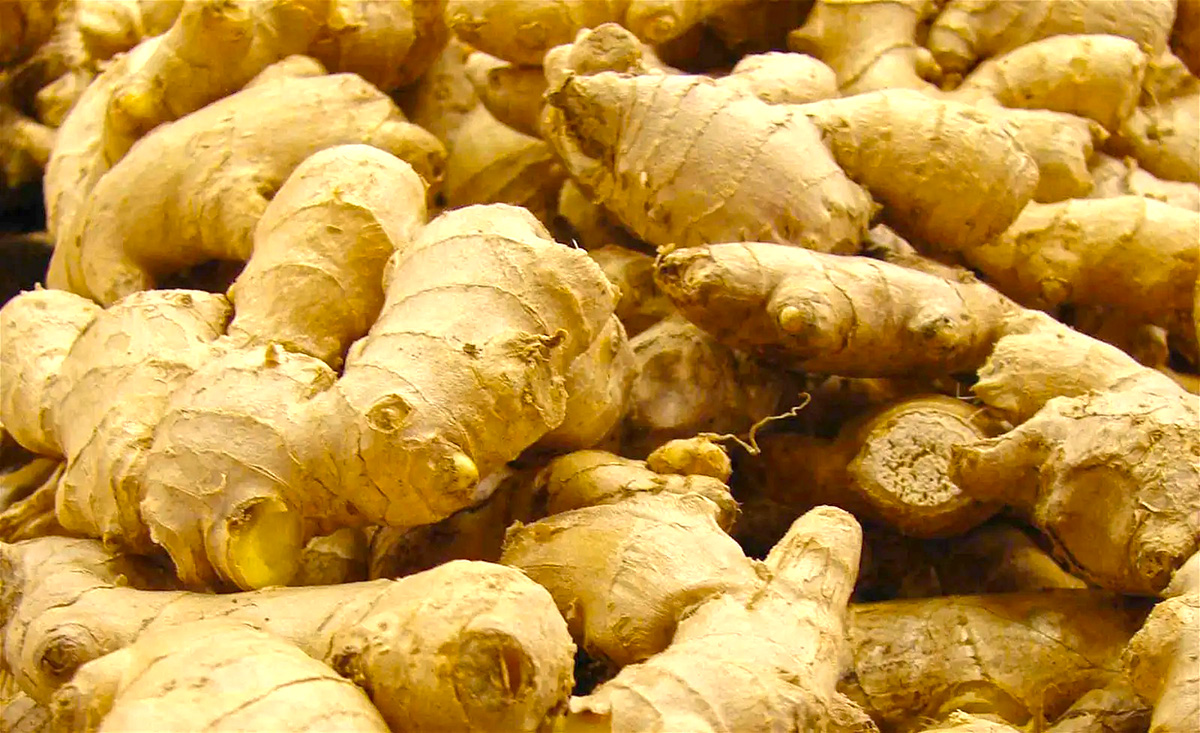
Ginger has quietly become one of Ghana’s most promising non-traditional export crops. It is grown predominantly in the forest-savannah transition zones. For thousands of smallholder farmers, it is more than a spice – it is a source of income, resilience, and opportunity.
But today, that promise is under threat.
Across major ginger-producing districts, farmers are battling a devastating outbreak of disease, often described as a “ginger blight” – that is wiping out entire fields. Yields have plummeted. Investments have been lost. And for many farmers, the future of ginger production is uncertain.

At first glance, this may appear to be a crop-specific problem. It is not. Ghana’s ginger issue is a systems failure, one that reflects deeper structural weaknesses in how we support agriculture.
A disease problem or a systems problem?
It is easy to frame the crisis as a plant disease problem. But diseases do not spread this destructively in strong systems – they expose underlying weaknesses, and Ghana’s ginger sector has several.
First, the planting material system is unreliable. Farmers predominantly rely on recycled rhizomes for planting, a practice known to increase the buildup and transmission of soil-borne pathogens over time. The absence of a structured system for certified, disease-free planting material continues to amplify risk.
Second, productivity remains below potential. Available data indicate that ginger yields in Ghana typically range between 5 and 15 metric tons per hectare, despite the potential to reach around 20 metric tons per hectare under improved practices. This yield gap reflects broader inefficiencies in input access, agronomic practices, and technical support.

Third, agricultural extension services remain overstretched. Many extension officers are responsible for thousands of farmers. Small-scale farmers often lack timely information on disease identification, prevention, and management. By the time support arrives, it is often too late.
Fourth, research is not reaching the farm. Ghana has capable research institutions, but the pipeline from laboratory to field remains weak. Solutions – whether improved agronomic practices or resistant varieties – are not being deployed at scale.
A vulnerable system exposed
Ghana’s ginger sector is not alone in facing disease pressures. Across West Africa, similar outbreaks have demonstrated how devastating such events can be.
In some cases, ginger disease epidemics have resulted in yield losses of up to 90 percent in affected areas. These experiences highlight the scale of risk when production systems lack resilience.
Yet in Ghana, there is no comprehensive, publicly available data quantifying the full extent of current losses.
This absence of data is not incidental – it reflects deeper challenges in agricultural monitoring, surveillance, and rapid response systems.
Discover more
Flora & Fauna
Alternative & Natural Medicine
Herbs & Spices
watches
Watches
Local Business Directory
Why this matters for Ghana’s agricultural future
The implications extend far beyond ginger.
Ghana has long emphasised the need to diversify agricultural exports beyond traditional commodities such as cocoa. Ginger represents one of the crops expected to drive this transition.
However, when farmers experience repeated and unmanaged losses, confidence erodes – not just in one crop, but in innovation itself.
The results? Farmers become less willing to invest in higher-value crops and more likely to revert to low-risk, low-return production systems.
This undermines productivity growth, rural incomes, and national agricultural transformation goals.
A familiar pattern
What is happening in the ginger sector reflects a familiar pattern in Ghanaian agriculture.
• Production increases without corresponding system support
• Pests or diseases emerge
• Farmers absorb the losses
• Attention shifts – until the next crisis
Ghana has seen this cycle before in tomatoes, maize, and poultry.
The lesson is clear: agriculture cannot succeed on production alone. It requires systems that anticipate, respond, and adapt.
What must be done now
If Ghana is serious about protecting its agricultural future, then the response must go beyond emergency interventions.
• Invest in planting material systems
Invest in the production and distribution of certified, disease-free ginger seed. (rhizomes).
• Rebuild extension capacity
Increase funding, staffing, and digital tools to ensure farmers receive timely, actionable advice.
• Close the research–farmer gap
Ensure that innovations developed by research institutions reach farmers in practical, usable forms.
• Build resilience into value chains
Support farmers with risk management tools, including access to credit and crop insurance, to cushion shocks.
A defining moment
The ginger crisis should not be treated as an isolated incident. It is a warning.
It is revealing whether Ghana’s agricultural system is capable of supporting the very transformation it envisions.
If the response is fragmented and reactive, the cycle will repeat – with another crop, in another season. But if this moment is used to fix the underlying systems, then the crisis could become a turning point.
Source: Graphic.com.gh






Discussion about this post