


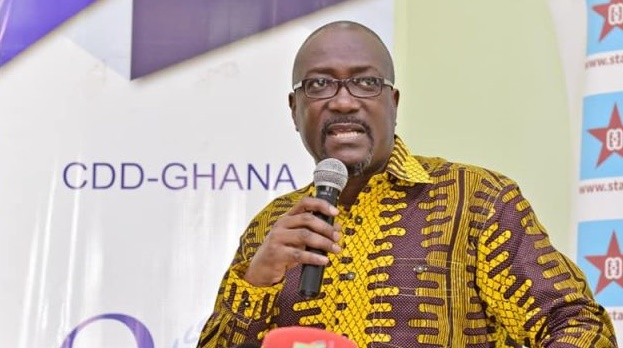
Chairman of the Constitution Review Committee, Prof Henry Kwasi Prempeh, says Ghana’s democratic debate has become too insular and overly fearful of change.
He warns that the country often resists workable reforms simply because they challenge the status quo.
Speaking on Joy News on December 25, Prof Prempeh said many of Ghana’s democratic challenges persist because the country allows them to continue.

“It’s because we allow it, we allow campaigning 24/7 over four years. I mean, we allow it,” he said.
He argued that Ghana’s approach to elections is not inevitable and is far from global practice. Drawing on his experience in the sub-region, he recounted a visit to Senegal ahead of its last election.
“We were in Senegal before their last election,” he said, adding that one thing stood out immediately. “No billboards. You will see, no posters, nothing.”
According to him, the reason was simple. “The election season had not opened so that you couldn’t mount billboards,” he said, even though the polls were barely a month away.
Prof Prempeh explained that these rules did not cripple political parties. “As a party, you could always do your things in-house, things to prepare for an election,” he said.
However, he noted that outdoor activities such as rallies, posters and jingles were regulated. “Those can be easily regulated,” he said.
He rejected claims that regulating the campaign period would disadvantage politicians. “So if we say that the season, it doesn’t mean that we are handicapping politicians,” he said.
“We’re saying that you cannot be doing your things as a party to get yourself organised.”
Prof Prempeh said resistance to such ideas often reflects Ghana’s inward-looking mindset. “I think the pushback against an idea should also look at it as we are part of a global community,” he said.
He questioned why reforms that work elsewhere are quickly dismissed in Ghana, citing the example of local governance in Sierra Leone.
“How is it working that the mayor of Sierra Leone, for example, of Freetown, is elected on a party ticket, and she’s from one party and the president of another party, they are coexisting, it’s working,” he said.
Prof Prempeh said similar arrangements are often rejected outright in Ghana. “In Ghana, people would say, ‘Oh, but it’s not going to work with NPP and NDC,” he said.
He suggested that such thinking assumes Ghana is fundamentally different. “You think that we are like from a different planet,” he said.
According to him, this mindset limits democratic progress. “So this insularity sometimes causes us to just, you know, box ourselves into a situation,” he said.
He warned that Ghana risks becoming trapped by existing arrangements. “As if the status quo captures us, and we can’t free ourselves from it,” he said.
Prof Prempeh insisted that change is both possible and proven. “So it is not true that you cannot have, you know, an election calendar that says campaigning cannot go on until the day,” he said.
He stressed that such systems are not theoretical. “It happens in many countries,” he added.




Discussion about this post