



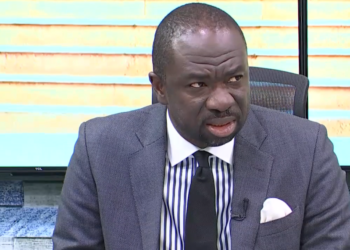
NDC Regional Communications Team member, Don Winans, has called for the introduction of a standardised system for determining transport fares in Ghana, arguing that fares should be based primarily on the distance travelled.
Speaking on Plan B FM’s Nkosuonsem, hosted by Obidehyie Kofi Sekyi, Winans said the current approach to transport fare adjustments does not provide a sufficiently structured basis for determining what passengers should pay.
His comments come amid concerns over rising fuel prices, following the government’s decision to suspend the GH¢1 fuel levy as part of measures to cushion consumers.

According to Winans, the government has absorbed part of the cost of fuel in an effort to prevent diesel prices from increasing by more than GH¢2 per litre.
He said the increase in fuel prices is not unique to Ghana but reflects developments on the international market, particularly amid the ongoing tensions around the Strait of Hormuz.
Winans cited fuel prices in the United States and the United Kingdom to illustrate the broader global pressure on petroleum products, noting that petrol reportedly sells at about US$1.58 per litre in the United States, while diesel is around US$2 per litre.
He also criticised what he described as inconsistencies in Ghana’s approach to calculating transport fares.
According to him, factors such as poor road conditions and the rising cost of spare parts, including what he referred to as “abosokan” spare parts, are often factored into fare adjustments, whereas international fuel prices are determined using more structured calculations.
Winans urged commercial transport operators to refrain from using the current fuel situation as an excuse to charge passengers fares above the approved rates.
He further cautioned the Ghana Private Road Transport Union (GPRTU) and other transport unions to ensure that their members comply with approved fares, warning that failure to regulate operators could force the government to intervene in the sector.
He cited the long queues sometimes experienced at Ayalolo stations as an example of challenges that could provide justification for greater government involvement in public transportation.
Winans said excessive pursuit of short-term profits by some transport operators could strain relations between transport unions and the government.
He therefore proposed that transport fares be calculated according to kilometres travelled, rather than factors such as the condition of roads along a particular route.
He argued that a metered, distance-based system would provide a clearer and more transparent basis for determining fares, helping to standardise charges and reduce disputes among passengers, transport operators and the government.
By: Kyei Pearl Ama Saah



Discussion about this post