


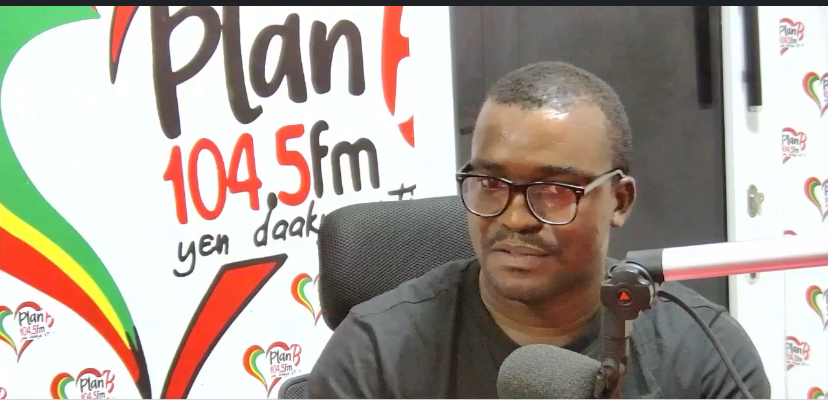
NPP Regional Communications Team member urges authorities to clarify enforcement measures and consider the economic impact on commercial motorcycle operators.
Sammy Darkwa, a member of the New Patriotic Party’s Regional Communications Team, has called on government institutions responsible for road safety to work together to address public concerns surrounding the enforcement of motorcycle helmet regulations. He said the controversy surrounding the regulations highlighted the need for better coordination among state agencies, increased public education and greater consideration of the economic circumstances of ordinary Ghanaians.
Speaking on Nkosuosɛm on Plan B 104.5 FM, Mr Darkwa said the regulations requiring motorcycle riders and passengers to wear protective helmets were not new. He noted that the debate had intensified following comments by the incumbent head of the National Road Safety Authority (NRSA), the NRSA’s Chief Executive, Abraham Amaliba, who reportedly described aspects of the regulations as requiring correction. Mr Darkwa argued that the public discussion had created uncertainty about the scope of the law and how it should be enforced.
Mr Darkwa cited Regulation 109 of the Road Traffic Regulations, 2026 (L.I. 2519), which he said requires motorcycle riders and passengers to wear appropriate protective helmets and reflective clothing. He also referred to Regulation 176(2), which he said provides for penalties against commercial motorcycle passengers who travel without protective helmets. According to him, the provisions demonstrate that the requirement already exists in law. He called on the relevant authorities to clarify the regulations and resolve any inconsistencies that may affect their implementation.
He stressed that road safety must remain a national priority, pointing to the serious consequences of motorcycle accidents, particularly for riders and passengers who travel without helmets. He said motorcycles were especially exposed on the road, making protective equipment essential in reducing the risk of severe head injuries and fatalities. While acknowledging the importance of enforcing safety regulations, he urged authorities to distinguish between the responsibilities of commercial motorcycle riders and those of their passengers.
Mr Darkwa also raised concerns about the financial implications of the regulations for commercial motorcycle operators and their customers. He noted that many riders depended on their activities to support themselves and their families, while some passengers might struggle to afford protective equipment. He therefore encouraged the government to consider measures that would make helmets more accessible and affordable, while ensuring that road safety requirements did not unnecessarily undermine the livelihoods of people engaged in legitimate economic activities.
He further called for stronger public education on road safety laws, saying the public debate suggested that many Ghanaians remained unclear about the requirements and penalties. He urged the National Road Safety Authority, the National Commission for Civic Education and other relevant institutions to intensify public awareness campaigns and ensure that citizens understood their responsibilities under the law.
Mr Darkwa concluded by appealing to the Ministry of Transport and the agencies under its oversight to coordinate their efforts and communicate a clear, consistent position on the regulations. He said the authorities should resolve any identified problems promptly, strengthen public education and consider the economic realities of ordinary Ghanaians. He maintained that protecting lives on the roads and supporting the livelihoods of citizens should be pursued together.
By: Raphael Narh Gatourhe



Discussion about this post