


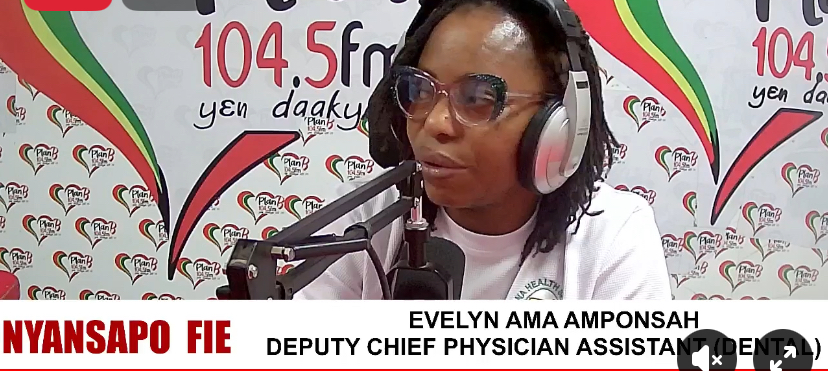
A Deputy Chief Physician (Dental) at the Tema Urban Hospital, Evelyn Ama Amponsah, has cautioned pregnant women about the increased risk of oral and dental infections during pregnancy, stressing the need for proper oral hygiene and early medical attention.
Speaking on Plan B FM’s Nyansapo Fie, hosted by Akosua Gyamfua, she explained that hormonal changes during pregnancy make women more vulnerable to gum disease and other oral infections, with studies indicating that a significant proportion of expectant mothers experience some form of periodontal condition.
She noted that common conditions such as pregnancy gingivitis characterised by swollen, red, and bleeding gums are often triggered by increased hormone levels, which make the gums more sensitive to plaque and bacteria. Poor oral hygiene and frequent snacking during pregnancy can further worsen the condition.

Dr. Amponsah clarified that while nausea and vomiting are common during pregnancy, they do not cure gum infections. Instead, she advised that women should rinse their mouths thoroughly with clean water after vomiting, as stomach acids can weaken tooth enamel and increase the risk of decay if not properly cleaned.
She further debunked the misconception that eating habits alone cause gum infections, explaining that the primary drivers are hormonal changes combined with inadequate oral care.
The dental expert urged pregnant women to maintain regular brushing with fluoride toothpaste, floss daily where possible, and reduce excessive sugar intake. She also encouraged routine dental check-ups during pregnancy, stressing that many women delay treatment due to fear, which can lead to complications.
According to her, untreated gum disease during pregnancy has been linked in some studies to risks such as premature birth and low birth weight, making oral health an important part of antenatal care.
Dr. Amponsah advised expectant mothers to seek immediate medical attention if they experience symptoms such as persistent gum bleeding, swelling, tooth pain, or discharge from the gums, noting that early treatment is safe and beneficial for both mother and baby.
She emphasised that proper oral care during pregnancy is not only safe but essential, and should be integrated into routine antenatal education at health facilities across the country.
By: Bernard Mensah |Planbfmonline.com






Discussion about this post